On family memory, traces of the past, and our responsibility to the future
Aleksandra Kožul, Communications Specialist
The past does not stay behind us as much as we sometimes imagine. It lives on in the places we recognise, the words we use, the customs we preserve, and the stories we pass on, often without giving much thought to where they came from. Occasionally, all it takes is an ordinary encounter with a trace of the past to remind us just how deeply it is woven into our lives.
“Every trace holds a story.”
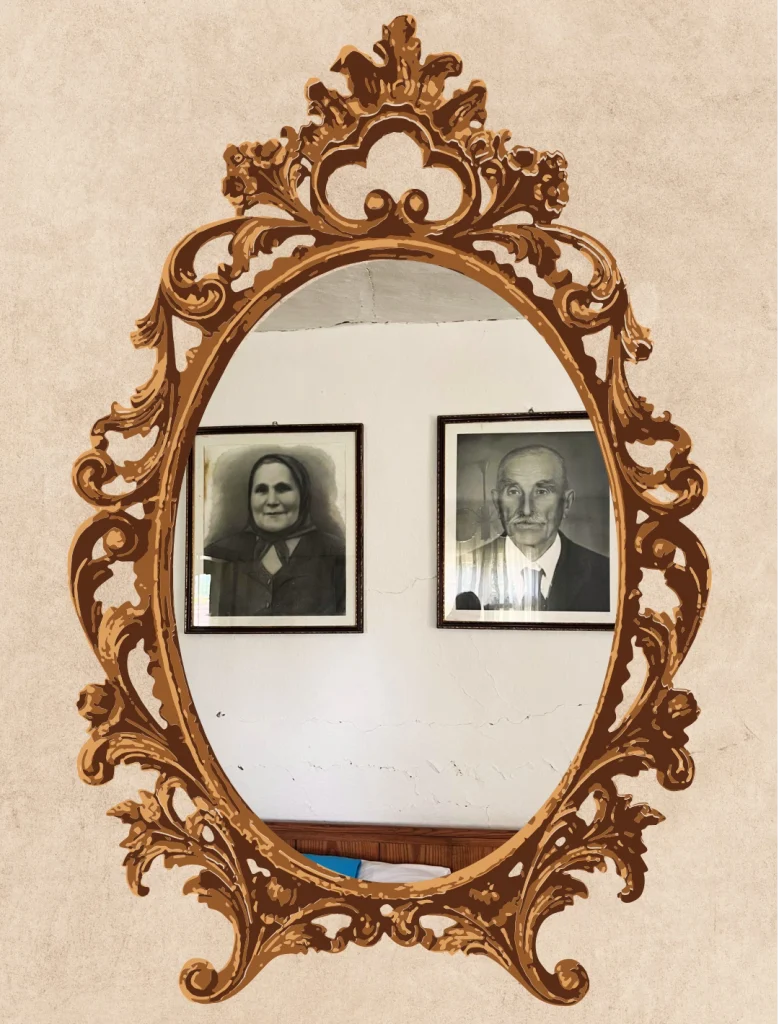
Some time ago, I came across a photograph of my great-grandmother and great-grandfather. I wondered what my great-grandparents were like, what mattered to them, what choices they made, and what they hoped to pass on to their children and grandchildren. How many of their stories have survived, and how many disappeared forever with those who could have told them?
That photograph became more than a family keepsake to me. It reminded me that behind every face, object, and document lies a story, and that how much of that story we preserve and understand depends, in part, on us.
What Do We Remember, and What Do We Pass On?
The memories we carry are not shaped by us alone. The way we remember the past and make sense of the events in our lives depends to a great extent on our families, communities, and the environments in which we grow up.
French sociologist Maurice Halbwachs argued that memory does not exist in isolation but takes shape within a social context. Family stories, conversations, and shared experiences help us understand not only what we have lived through ourselves, but also a past handed down to us by others.
In his book Remembering, British psychologist Frederic C. Bartlett showed that memory is not simply a reproduction of the past. Rather, it is a process through which we connect our experiences with later knowledge and expectations. Over time, certain details fade, others take on greater significance, and the elements repeated most often can become central to the stories we pass on.
“Memory lives not only in people and their stories, but also in photographs, letters, objects, records, and customs.”
German Egyptologist and cultural theorist Jan Assmann developed the concept of cultural memory, highlighting the importance of such traces in preserving a shared relationship with the past. They allow experiences and meanings to be passed on even when those who witnessed them first-hand are no longer with us.
Yet not all traces of the past survive, and not all receive the same attention. What do we choose to preserve? Which stories do we record, whose voices do we hear, and what happens to experiences that remain unspoken?
A Heritage That Lives On
The traces of the past we preserve form part of the heritage we leave to future generations. Heritage takes many forms, from buildings, works of art, objects, and written records to languages, music, customs, crafts, and knowledge passed down from one generation to the next. While tangible heritage preserves physical evidence of the past, intangible heritage carries forward the ways in which people lived, created, and expressed their values.
“Heritage lives on as long as there is someone to understand it and pass it on.”
The “kolo”, traditional Serbian circle dancing, singing to the accompaniment of the gusle, the family patron saint’s day known as slava, and the pottery of Zlakusa are all examples of intangible cultural heritage that reflect the diversity of our traditions. Their significance lies not only in their survival, but in the fact that they remain living practices—celebrated, performed, and shared today.
Heritage lives on through people who keep customs alive, pass on skills, and tell stories that might otherwise disappear. This does not mean that everything must remain unchanged. It means understanding the origins and significance of what we have inherited so that we can decide what we wish to pass on to future generations and how.
Faith, Memory, and a Place That Has Endured for Centuries
In the Orthodox Christian tradition, the past is preserved through faith, worship, and religious and cultural traditions handed down from one generation to the next. For centuries, monasteries have been places of prayer and spiritual life, as well as custodians of art, literacy, and cultural memory. Within their walls, monastic life, spiritual experience, and a heritage that extends beyond the span of any individual life come together. Their architecture, frescoes, manuscripts, and liturgical practices bear witness to the times in which they emerged, while the continuing life of the monasteries sustains and carries this tradition forward. For believers, these places also hold a profound spiritual significance that goes beyond their historical and artistic value.
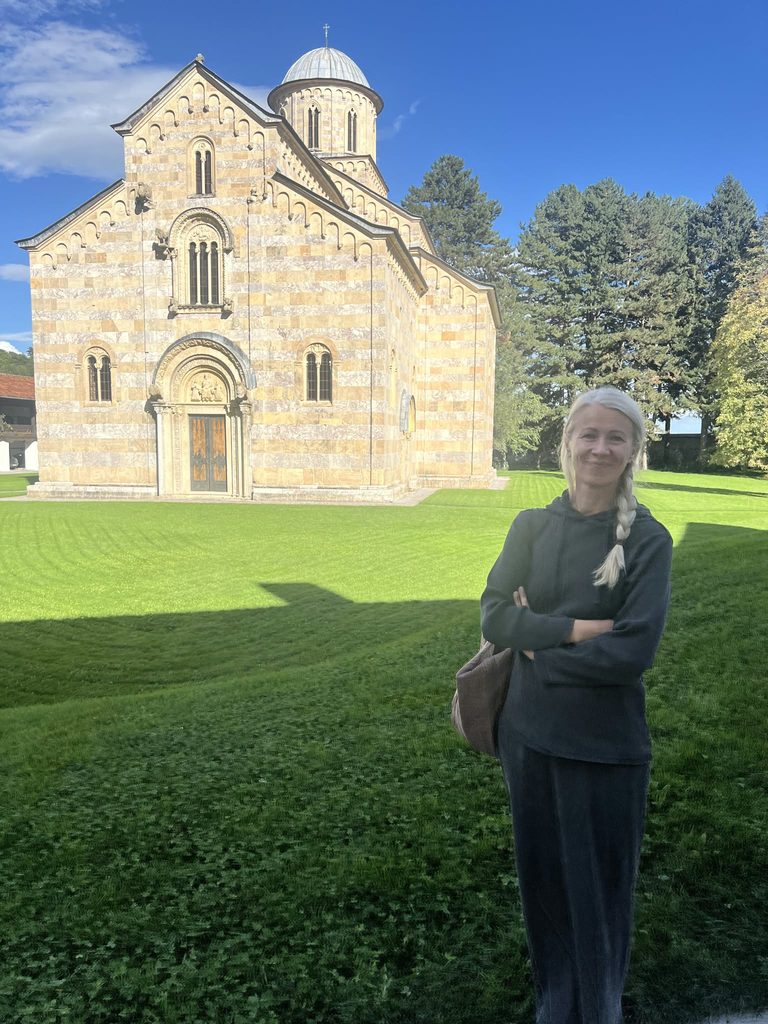
Yet the meaning a place holds for people does not arise solely from its history, faith, or appearance. It is also shaped by collective memories, cultural perceptions, and spiritual experiences. Scholars from different disciplines have explored precisely this interplay between place, memory, and faith.
French historian Pierre Nora examined the relationship between place and collective memory, showing how certain sites, symbols, and objects become vessels of shared remembrance and foundations of a community’s identity. The historian of religion Mircea Eliade, meanwhile, explored the significance of sacred space in religious experience, showing how, within religious traditions, certain places acquire a spiritual meaning that goes beyond their physical form and historical significance.
“Some places hold more than history: for centuries, they have carried the memories, faith, and spiritual experiences of generations.”
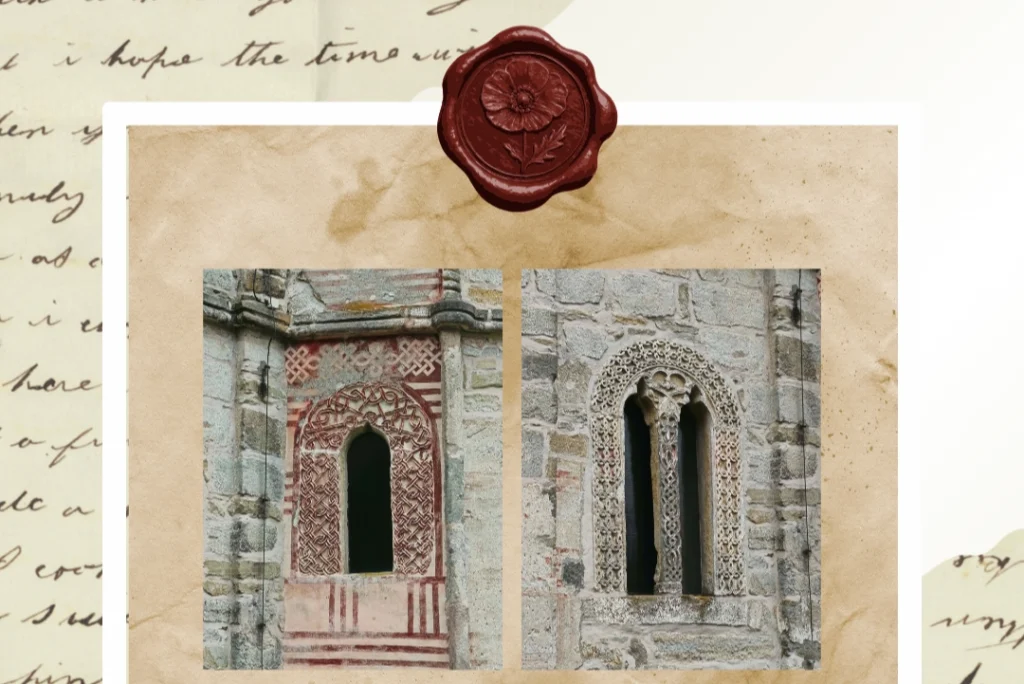
For me, the connections between place, memory, and faith are most clearly expressed in the Monastery of Visoki Dečani. This Serbian Orthodox monastery, whose history spans nearly seven centuries, bears witness to a remarkable meeting of faith, art, and history. Its distinctive features include unique architecture in which Eastern and Western influences intertwine, more than a thousand fresco compositions covering approximately 4,000 square metres of wall space, and the continuity of monastic life and spiritual tradition passed down through generations. The Monastery of Visoki Dečani was inscribed on the UNESCO World Heritage List in 2004. In 2006, it became part of the expanded World Heritage property Medieval Monuments in Kosovo, while also being placed on the List of World Heritage in Danger.
In 2027, the monastery will mark seven centuries since construction began. This major anniversary is not only an opportunity to reflect on its history and artistic significance, but also to consider how we can bring its heritage closer to those who are only just discovering it, particularly young people. Preservation is about more than protecting stone and works of art. It is equally important to pass on the stories, values, and spiritual tradition that give this place its distinctive significance, enabling future generations to discover and understand them for themselves.
Communication Gives Heritage a Voice
For heritage to continue to live beyond the places and communities from which it originates, we need to make its stories accessible and meaningful to others. It is not enough to present heritage through dates, historical facts, and descriptions of objects alone. We need to explain what these things tell us about people, their times, and their ways of life. Only then can historical information become meaningful to those who have no direct connection to that heritage.
American communication theorist James W. Carey highlighted the role of communication in shaping and sustaining shared meanings and our understanding of the world. From this perspective, communicating heritage means more than presenting historical facts. It is a way of keeping the experiences of previous generations within our collective memory and making them accessible to those who did not experience them first-hand.
A family photograph, a letter kept in a drawer, a record of a custom, or a conversation with someone who remembers a different time can be the starting point for such a story. To tell it faithfully, we need to verify testimonies, understand the circumstances in which they came into being, and connect them with other available sources. This helps us avoid presenting an individual memory as the sole and definitive truth about the past.
“Heritage lives on when we make its stories accessible, understandable, and meaningful to the generations to come.”
Today, digital technologies allow us to preserve photographs, documents, recordings, and oral testimonies and make them available to a much wider audience. Yet being able to find something online does not necessarily mean understanding its significance. That requires context, reliable information, and a story that connects individual traces with the people and the time in which they were rooted.
Young people have a particularly important role to play in this process. When we give them opportunities to explore, talk to people, ask questions, and discover sources for themselves, heritage becomes more than a subject from the past that they study. It becomes something they can develop a personal connection with, question, and reinterpret, perhaps finding new ways to share its meaning with others.
What Do We Leave to Those Who Come After Us?
I sometimes find myself returning to the photograph of my great-grandmother and great-grandfather. I still do not know everything I would like to know about their lives. But I do know that this photograph opened up a space for questions I might never have asked had I not found it.
Perhaps that is part of what heritage is about: encouraging us to understand those who lived before us and to reflect on what we will leave to those who come after us. For heritage is not only what we have received, but also what we will pass on through our understanding, our attitude, and our actions.
——————————————
References and Sources
Academic Literature
- Assmann, Jan. “Communicative and Cultural Memory.” In Erll, Astrid, and Ansgar Nünning (eds.), Cultural Memory Studies: An International and Interdisciplinary Handbook. Berlin and New York: De Gruyter, 2010, pp. 109–118. https://doi.org/10.1515/9783110207262.2.109
- Bartlett, Frederic C. Remembering: A Study in Experimental and Social Psychology. Cambridge: Cambridge University Press, 1932.
- Carey, James W. Communication as Culture: Essays on Media and Society. Boston: Unwin Hyman, 1989.
- Eliade, Mircea. The Sacred and the Profane: The Nature of Religion. Translated by Willard R. Trask. New York: Harcourt, Brace, 1959.
- Halbwachs, Maurice. On Collective Memory. Edited and translated by Lewis A. Coser. Chicago: University of Chicago Press, 1992.
- Nora, Pierre. “Between Memory and History: Les Lieux de Mémoire.” Representations, no. 26, 1989, pp. 7–24. https://doi.org/10.2307/2928520
Official Documents and Online Sources
- UNESCO Convention for the Safeguarding of the Intangible Cultural Heritage. 2003. https://ich.unesco.org/en/convention
- UNESCO Intangible Cultural Heritage in Serbia. https://ich.unesco.org/en/state/serbia-RS
- UNESCO World Heritage Centre. Medieval Monuments in Kosovo. https://whc.unesco.org/en/list/724/
- Monastery of Visoki Dečani. Official website. www.decani.org/rs/